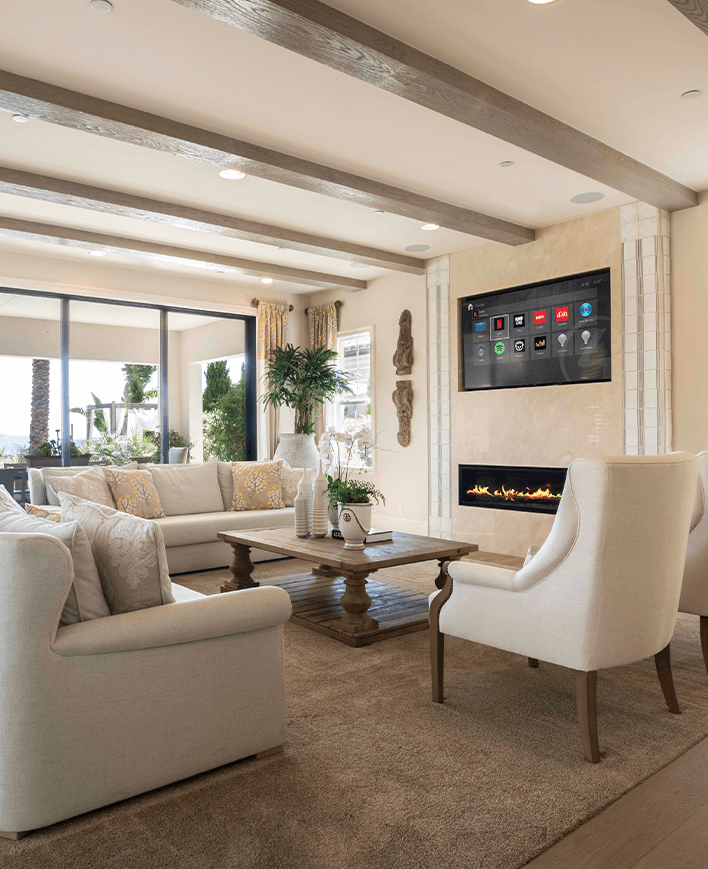
 A room can look gorgeous and still sound… harsh. Open layouts, hard surfaces, high ceilings, and minimal decor are all beautiful on Instagram, but they often create echo, muddy dialogue, and that “why does this feel loud but not clear?” problem in real life. The good news is you don’t need to turn your living room into a blacked-out theater to fix it. Multi-use media room acoustics are about balancing sound performance with design—so the room works for movie night and everyday living.
Multi-Use Media Room Acoustics – Why Open Layouts Create Echo
Sound bounces. In open-concept spaces with tile floors, large windows, and bare walls, those reflections stack up fast. You might hear dialogue but struggle to understand it, especially at lower volumes. Music can feel sharp or “thin,” and TV sound gets lost the moment someone runs the dishwasher or talks in the kitchen. Improving multi-use media room acoustics starts with recognizing that the room itself is part of the system.
Multi-Use Media Room Acoustics Start With the Surfaces
The simplest improvement is softening the major reflection points. Rugs, upholstered furniture, and layered textiles help absorb sound energy instead of letting it ricochet. You don’t need heavy drapes everywhere, but strategic fabric placement makes a big difference. Even a room that keeps a clean, modern look can incorporate acoustically helpful materials in a way that feels intentional.
Treat the Room Without Making It Look Treated
Many people avoid acoustic solutions because they picture foam panels or studio vibes. Modern acoustic design is far more subtle. Wall treatments can look like art. Ceiling treatments can blend into architectural lines. Built-ins, bookshelves, and even certain types of wallcovering can contribute to better sound without screaming “sound treatment.” The best multi-use media room acoustics solutions disappear into the design.
Speaker Placement Can Either Help or Hurt
In open rooms, speaker placement matters more than people expect. If speakers are too far apart, too high, or blocked by furniture, clarity drops quickly. Soundbars can struggle in big open spaces when the room is reflecting heavily. Surround setups can be amazing, but only if planned around actual seating locations and the shape of the room. Professional design isn’t about complexity—it’s about getting the fundamentals right so you’re not chasing volume just to hear words.
Don’t Forget the Ceiling
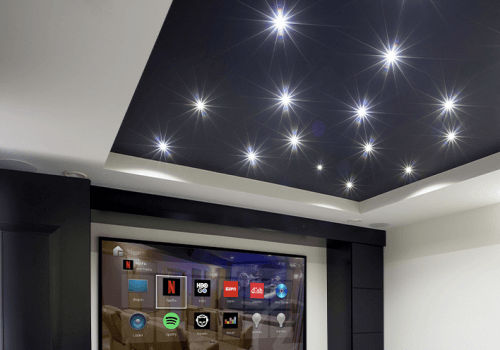
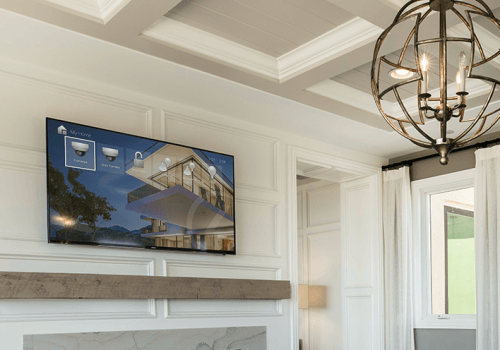
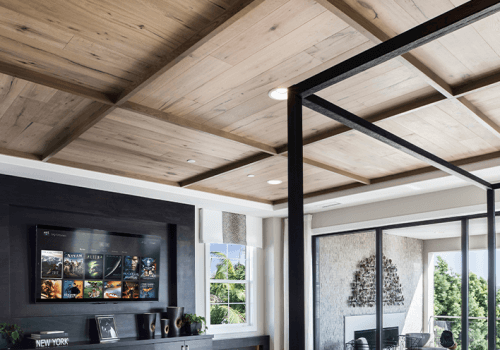
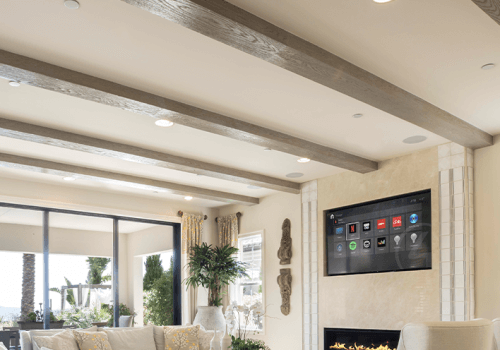
High ceilings and open beams are beautiful, but they can be a major source of echo. When wall solutions aren’t enough, a ceiling strategy may be the missing piece. That might mean discreet acoustic clouds, architectural treatments, or design-forward panels that align with lighting. For many homes, addressing the ceiling is what finally makes multi-use media room acoustics feel “finished.”
Multi-Use Media Room Acoustics – A Space That Sounds As Good As It Looks
Great sound should feel effortless. When echo is controlled and dialogue is clear, the whole room becomes more comfortable—conversation is easier, music feels warmer, and movie night doesn’t require blasting the volume. With well-planned multi-use media room acoustics, you can keep your space open, bright, and design-forward while still getting the performance you want.